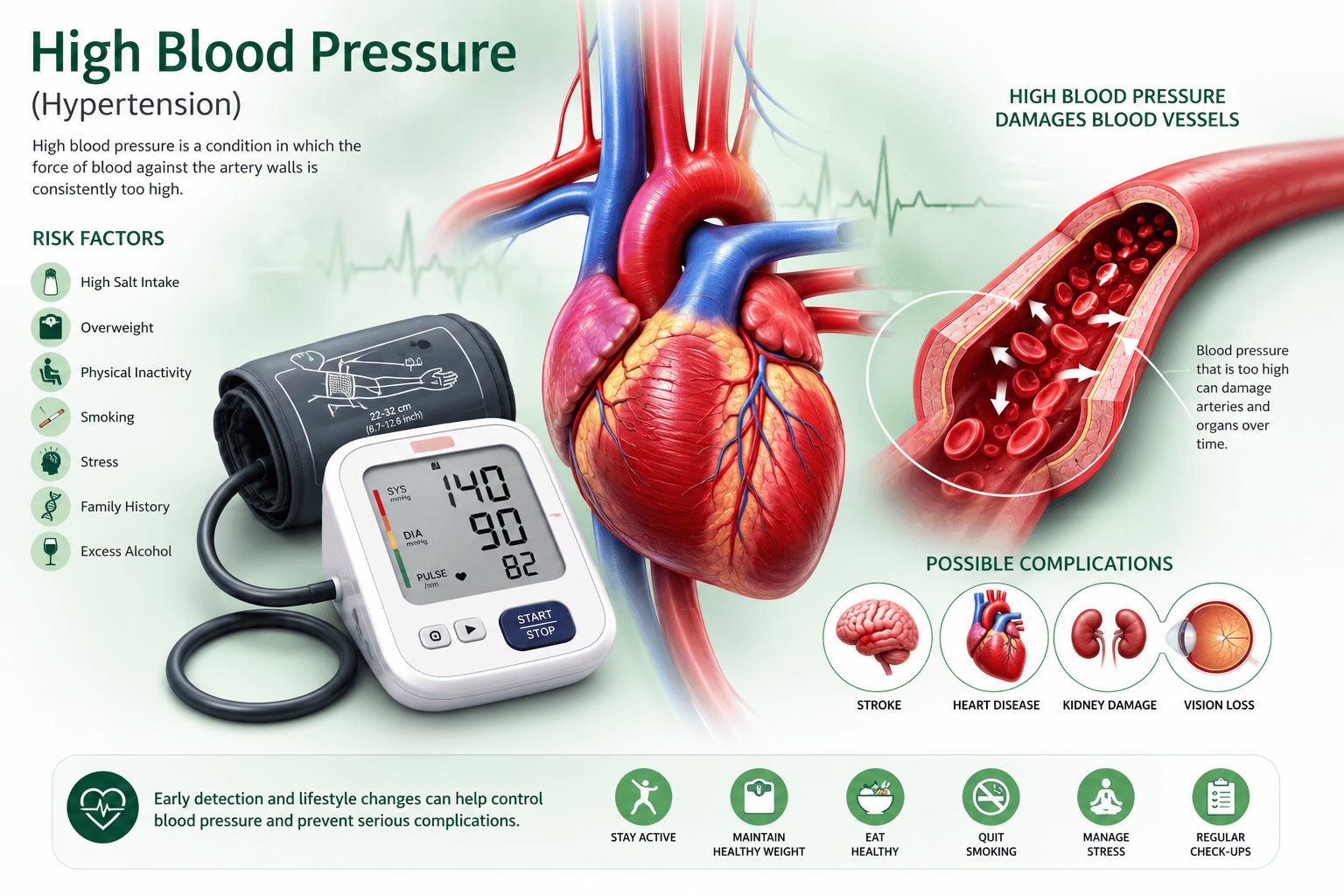
What is High Blood Pressure? High blood pressure, or hypertension, is a common condition where the force of blood against your artery walls is consistently too high. Often symptomless, it significantly increases the risk of heart disease and stroke, but can be effectively controlled through lifestyle changes and medication.
Medical Disclaimer: This hub is for informational purposes only. It is not a substitute for professional medical advice, diagnosis, or treatment. Read our policy.
High blood pressure, medically known as hypertension, is a common condition where the force of the blood against your artery walls is consistently too high. It is categorized into primary (essential) hypertension, which develops gradually over years, and secondary hypertension, which is caused by an underlying condition like kidney disease or sleep apnea.
According to the World Health Organization (WHO), an estimated 1.28 billion adults aged 30–79 years worldwide live with hypertension, yet nearly half are unaware they have it. Often dubbed the "silent killer," high blood pressure rarely presents with noticeable symptoms until it causes significant damage, eventually leading to a heart attack, stroke, or heart failure.
The good news is that high blood pressure is highly manageable. By addressing modifiable risk factors—such as high sodium intake, physical inactivity, obesity, and excessive alcohol consumption—individuals can significantly lower their blood pressure. When lifestyle modifications are not enough, modern medicine offers highly effective antihypertensive medications like ACE inhibitors and calcium channel blockers to keep readings in a safe range.
This comprehensive hub is designed to help you understand the causes of high blood pressure, recognize the importance of regular monitoring, and navigate the lifestyle and medical pathways to maintain healthy blood pressure levels.
High blood pressure affects nearly every part of the body. Explore specific topics to understand symptoms, management strategies, and lifestyle interventions.
Hypertension is often symptomless, but severe cases can cause headaches, nosebleeds, and dizziness.
Explore TopicUnderstand primary (essential) vs. secondary causes, from genetics to underlying kidney issues.
Explore TopicAge, family history, obesity, and high sodium intake significantly increase your likelihood of developing high BP.
Explore TopicHow blood pressure is measured using systolic and diastolic numbers, and what qualifies as hypertension.
Explore TopicClinical pathways for lowering blood pressure, combining prescribed medications with daily habits.
Explore TopicDeep dive into ACE inhibitors, Beta-blockers, Calcium Channel Blockers, and Diuretics.
Explore TopicDietary Approaches to Stop Hypertension. Learn how reducing sodium and eating heart-healthy foods lowers BP.
Explore TopicPhysical activity routines that safely strengthen the heart and naturally reduce arterial pressure.
Explore TopicUncontrolled BP leads to severe issues: stroke, heart failure, kidney disease, and vision loss.
Explore TopicProactive steps to keep blood pressure in a healthy range before medication becomes necessary.
Explore TopicDaily management tips, home monitoring best practices, and long-term coping strategies.
Explore TopicDifferentiate between isolated systolic, malignant, resistant, and pulmonary hypertension.
Explore TopicExplore our editorially curated deep dives into specific mechanisms, emergency responses, and lifestyle management strategies for high blood pressure.
Understand what happens when blood pressure spikes dangerously high, and why immediate medical intervention is critical.
A hypertensive crisis is a severe increase in blood pressure that can lead to a stroke or heart attack. Knowing the signs of a hypertensive emergency—such as severe headache, chest pain, and blurred vision—can be life-saving. Learn how doctors rapidly lower blood pressure in the ER to prevent irreversible organ damage.
Read the Full GuideFrom ACE inhibitors to calcium channel blockers, explore how different antihypertensive drugs work to lower your numbers.
Explore MedicationsDietary Approaches to Stop Hypertension. Discover how reducing sodium and eating nutrient-rich foods naturally lowers BP.
Read Diet GuideChronic hypertension damages blood vessels, leading to severe complications like stroke, kidney failure, and vision loss.
Explore RisksHigh blood pressure affects nearly every organ system. Explore specific conditions linked to hypertension to understand risks, symptoms, and treatments.
Take a proactive approach to your cardiovascular health. Use our medically reviewed calculators to evaluate your personal risk factors and understand your clinical numbers.
Estimate your 10-year risk of developing heart disease based on your blood pressure, cholesterol levels, and lifestyle metrics.
Launch ToolCalculate your Body Mass Index to determine if your weight is within a healthy range—a critical metric for managing high blood pressure.
Launch ToolInput your latest blood pressure reading to instantly understand what your numbers mean and where you fall on the clinical scale.
View ChartHigh blood pressure is highly preventable and manageable. Adopting targeted lifestyle changes is the most effective defense against hypertension and its severe cardiovascular complications.
Excess dietary salt causes your body to retain water, putting extra pressure on blood vessel walls. Limiting sodium is a cornerstone of the DASH diet.
Carrying excess weight forces your heart to work harder to pump blood. Losing even a small amount of weight can significantly lower your blood pressure numbers.
Regular aerobic exercise makes your heart stronger, allowing it to pump more blood with less effort. This naturally decreases the force on your arteries.
Alcohol can raise blood pressure, while tobacco smoke instantly damages blood vessel walls and accelerates plaque buildup. Quitting both is critical.
Starting at age 18. If you have elevated readings, your doctor may recommend monitoring daily at home.
High cholesterol often coexists with hypertension, compounding cardiovascular risk.
High blood pressure can damage kidneys over time. Doctors may test creatinine to monitor kidney health.
Answers to the most common questions about hypertension, risk factors, and treatments.
Medical Disclaimer: This hub is for informational purposes only. It is not a substitute for professional medical advice, diagnosis, or treatment. Read full policy.